
Your cart
There are no more items in your cart
Non-Absorbable Sutures
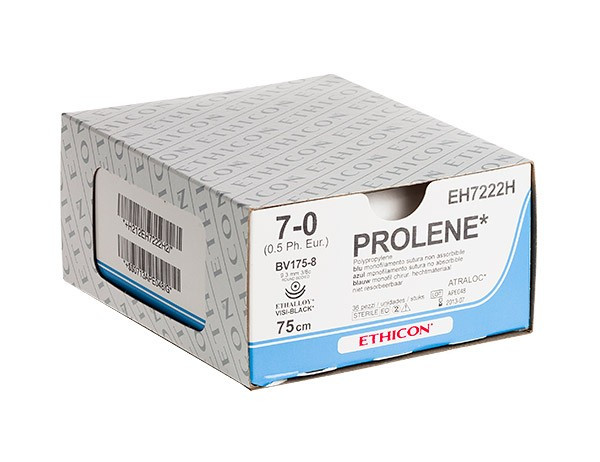
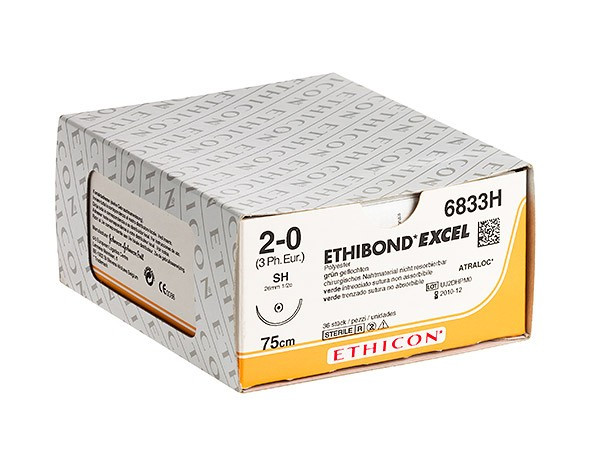
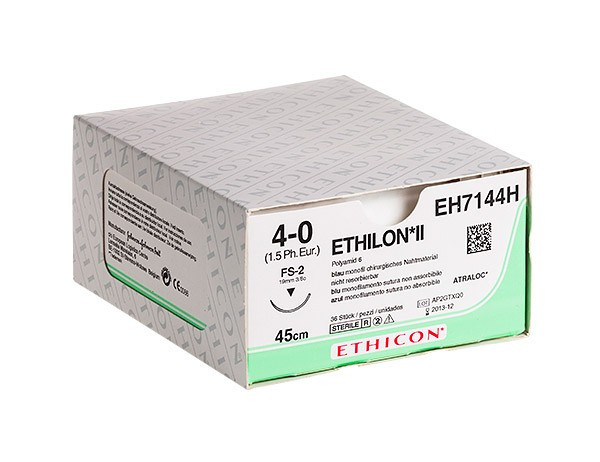
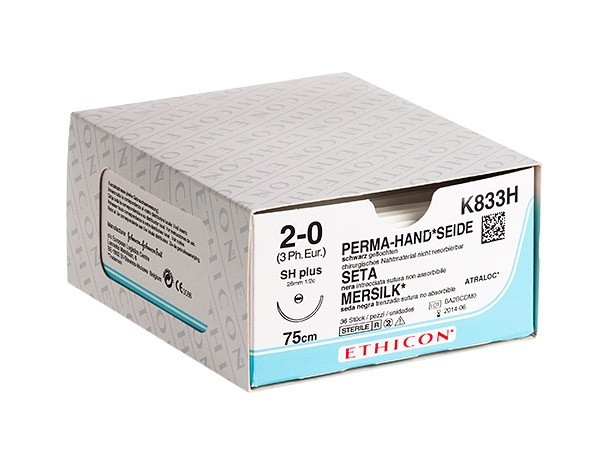
In addition to the products listed here Ethicon also offers the non-absorbable sutures Pronova®, Mersilene®, Nurolon® and Steel sutures. To learn more about these products please see the Ethicon product catalogue. To order any of these products, please contact us here.
Monofilament vs multifilament non-absorbable sutures
Monofilaments (e.g., Prolene, Ethilon) typically provide low tissue drag, low capillarity and easy removal—helpful in contaminated fields or when smooth passage is critical. Multifilaments (e.g., Ethibond, Silk) offer pliable handling and strong knot security, which many surgeons prefer for precise approximation in controlled fields.
Complications of non-absorbable sutures
Potential issues include chronic foreign-body reaction or granuloma, “spitting”/extrusion, sinus formation, and infection risk—especially with braided materials in contaminated wounds due to wicking. Appropriate material selection, meticulous technique, and adherence to local protocols reduce these risks; elective removal may be indicated for skin or symptomatic sutures.
Ethicon PDS II vs Vicryl suture comparison
Although both are absorbable (covered on the Absorbable Sutures page), they are frequently compared. PDS II is a monofilament designed for extended strength retention (often up to ~6 weeks) with total absorption ~180–210 days—useful for fascia or tissues needing prolonged support. Vicryl is a braided option offering versatile handling with a medium support window (typically ~2–3 weeks) and absorption ~56–90 days—well suited to general soft-tissue approximation.